Burrata Goes On After the Fire (Here's Why)
Put burrata in a 450°C oven and you don't get melted burrata. You get a sad, split puddle and a small tragedy. So we never do. The fire is for the base. The burrata comes after.
It looks like a shortcut and it is actually the opposite — a piece of discipline most kitchens skip because it slows the pass down by thirty seconds. Here is the reasoning behind those thirty seconds.
What burrata actually is
Burrata is a shell of mozzarella wrapped around a soft, creamy centre of stracciatella and cream. That centre is the whole point. Heat it hard and the cream breaks, the fat weeps out, and you lose the cool, milky contrast that makes the dish.
The best moment on the plate is the temperature gap — scorched crust under cold cream. Bake the burrata and that moment disappears.
The timing
The base goes into the oven naked, or dressed only with tomato and a little oil. It blisters, chars at the rim, and comes out roaring hot. Only then — at the pass, seconds before it travels — do we tear the burrata over the centre so it slumps into the heat without cooking.
Why the order matters
- Texture — a crisp, leopard-spotted base against a cool, spilling centre.
- Temperature — hot dough, warm tomato, cold cream, all in one bite.
- Flavour — the cream stays sweet and clean instead of turning oily and flat.
How to eat it
Don't wait. Burrata is a clock — the magic lives in the first few minutes before the cream warms through. Break the centre open, drag it across the base, and finish it before it has a chance to settle.
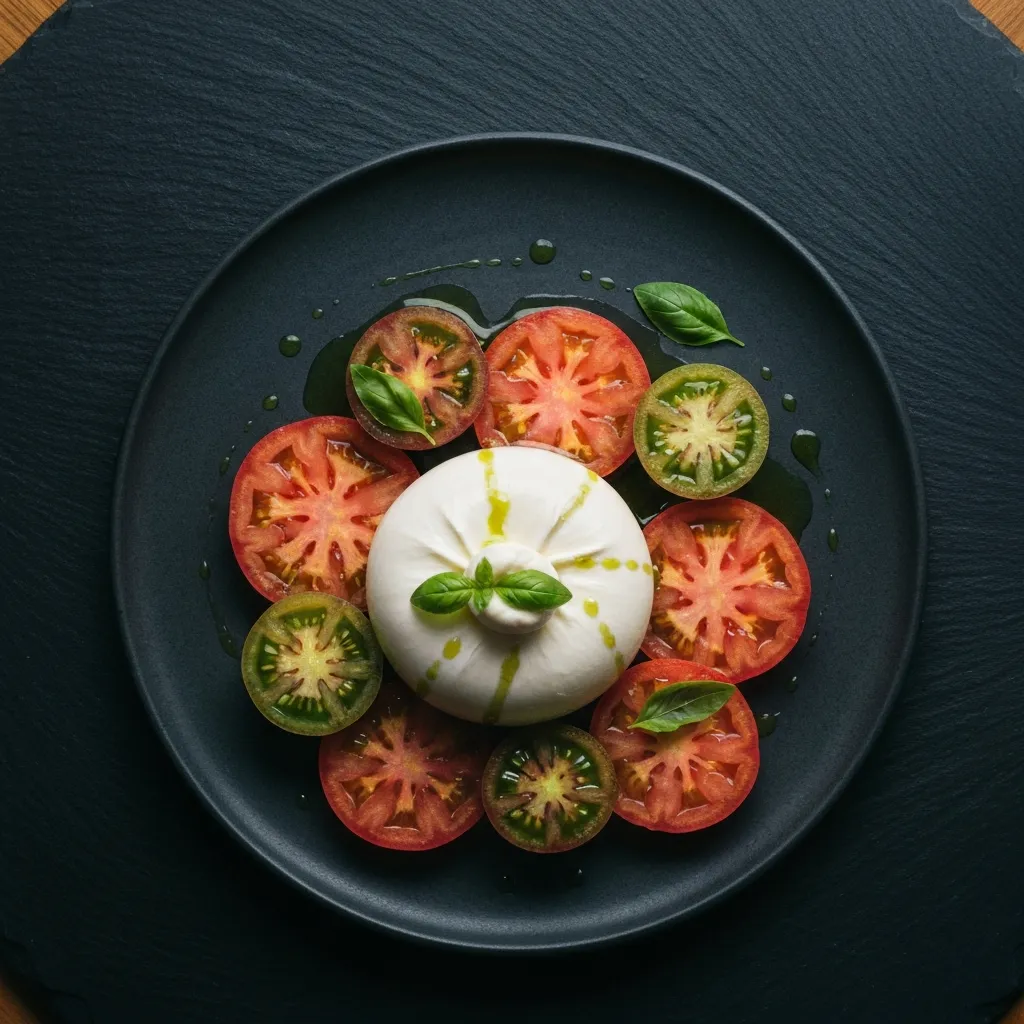
Our burrata sits over heirloom tomatoes and a slick of good oil. Find it on the menu, or come sit by the fire and we'll send it out the second it's built.
