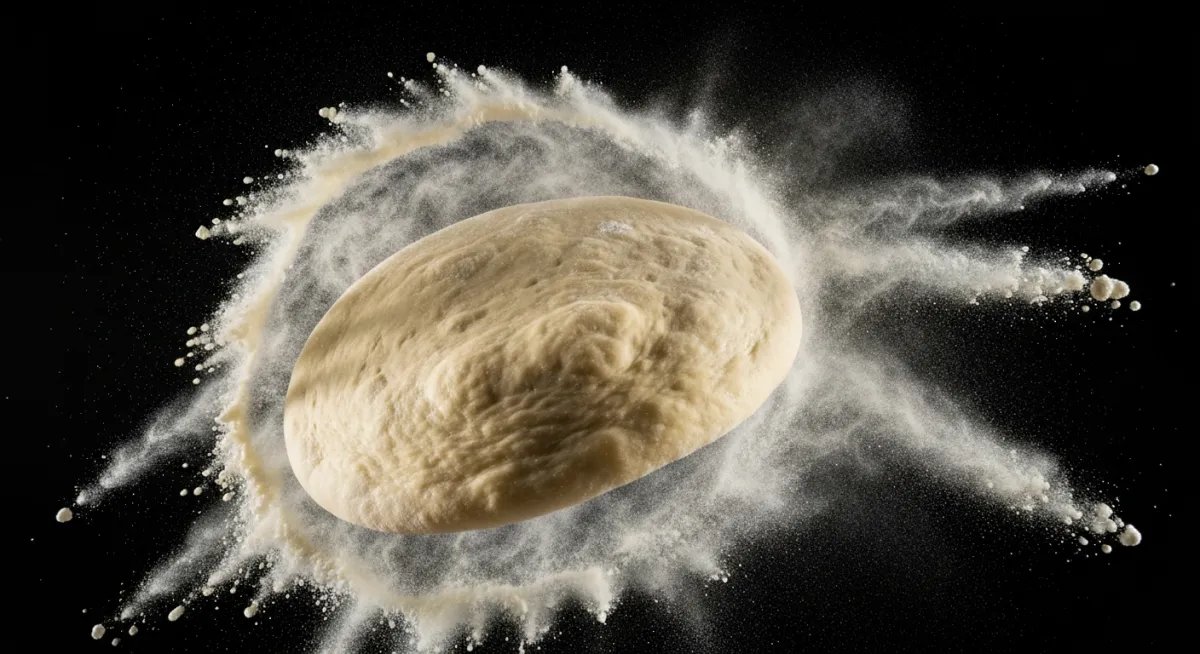
Why Slow-Fermented Dough Tastes Better
Ask any pizzaiolo what separates a good pizza from one you remember for a week, and most will point at the same place: not the toppings, not the cheese, but the dough underneath it all. At Fat Ninja Pizza we let ours ferment for 48 hours before it ever sees the oven. That isn't a flourish. It's the single decision the rest of the kitchen is built around.
Here's what those two days actually do.
Fermentation is flavour you can't add later
When flour and water meet, two quiet processes start working. Wild and added yeasts feed on the sugars in the flour and release carbon dioxide, which is what gives a good crust its open, airy structure. At the same time, enzymes begin breaking long starch molecules into simpler sugars and the proteins into amino acids.
Those amino acids and sugars are the raw material of flavour. Rush the dough and you skip the chemistry: you get bread that tastes of, well, flour. Give it 48 hours in a cold prove and the same dough develops the faintly nutty, gently sour, almost sweet depth that you can taste even before the first topping goes on.
A same-day dough is a blank page. A slow-fermented one has already started telling the story.
Cold and slow beats warm and fast
You can make dough rise in two hours on a warm bench. It will puff up nicely and it will be ready for service. But speed and flavour pull in opposite directions. A fast, warm rise races through the gas production and never gives the enzymes time to do their slower, tastier work.
Cold fermentation — ours rests at just above fridge temperature — slows the yeast right down so the flavour-building enzymes can catch up and overtake. The result is dough that's easier to shape, blisters beautifully, and holds its structure under a 450°C flame.
It's lighter on your stomach, too
This is the part people don't expect. That long, slow ferment also begins breaking down some of the components in wheat that make heavier, faster breads sit like a brick. Many guests who find ordinary pizza a little much tell us a properly fermented crust simply feels lighter. Same flour. Very different afternoon.
The 90-second finish
Forty-eight hours of patience earns one dramatic moment. Our wood-fired oven runs at around 450°C, and a well-fermented base cooks through in roughly 90 seconds — long enough to char and blister the edge, short enough to keep the centre tender and never dry. A slack, under-fermented dough can't survive that heat the same way. The fermentation is what makes the speed possible.
What to look for in any good pizza
- The cornicione — the puffed outer rim — should be open and airy inside, not dense.
- Leopard-spotting — small dark blisters on the crust — is a sign of real heat and a lively dough.
- The chew should be tender with a little resistance, never gummy or cracker-flat.
None of this is a secret recipe. It's just respect for time. Two days of it, every single batch.
Taste the difference yourself. Our 48-hour dough is on every pizza we serve at Star Boulevard KLCC. See the menu or find us here — and come hungry.
